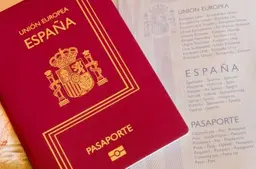
Nationality Convention between the Kingdom of Spain and the French Republic

The President of the Government of Spain, Pedro Sánchez, and the President of the French Republic, Emmanuel Macron, approved in November 2020 the Nationality Convention between the Kingdom of Spain and the French Republic, which makes it possible to hold dual Spanish and French nationality without having to renounce the nationality of origin.
In March 2019, Spain proposed to the French authorities that negotiations begin on a bilateral nationality agreement, submitting a draft convention through our Embassy in Paris. The negotiations continued until September 2020, when a consensus was reached with the French authorities on the wording of the text.
This Convention is the first of its kind signed with a State outside the Ibero-American sphere, hence its significance for relations between the two countries.
The purpose of this Convention is to stop requiring nationals of either party to renounce their nationality of origin when they acquire the nationality of the other party.
The Convention
The Convention consists of a Preamble and 5 articles.
- Art. 1 provides that Spaniards may acquire French nationality and French citizens may acquire Spanish nationality while keeping their previous nationality, provided they meet the requirements set out in the legislation of the State whose nationality they acquire.
- Art. 2 deals with the issuance and renewal of passports or identity documents for persons covered by this Convention, which will follow the rules of each party.
- Art. 3 concerns Spaniards and French citizens who, before the Convention came into force, lost their previous nationality by acquiring French or Spanish nationality, respectively. It gives them the option of benefiting from the provisions of this Convention.
- Art. 4 provides for periodic consultations between the two parties to ensure the proper application of the Convention and to agree on any amendments.
- Art. 5 governs the entry into force of the Convention, setting it on the first day of the month following the date on which the parties have notified each other that the internal legal procedures required for its entry into force have been completed.
Dual nationality: how do you obtain it?
Obtaining Spanish nationality
To obtain Spanish nationality you must meet a series of requirements, some of which must also be officially certified.
- Live in Spain legally and continuously for at least ten years.
- Have no criminal record.
- Have sufficient knowledge of the country's Constitution and of its social and cultural life. Certification is required.
- Integration into Spanish society.
- Official certification of Spanish language skills, at least at level A1 in writing and speaking.
However, there are exceptions to the required period of residence in Spain. The minimum is reduced to five years for refugees, and to two years for nationals of Ibero-American countries, the Philippines or Equatorial Guinea, among others. Only one year of residence is required for those born in Spain, those married to a Spanish man or woman, widows or widowers of a Spaniard, and those who have been under the guardianship or foster care of a Spanish citizen for two years.
Obtaining French nationality
Certain requirements also apply to obtain French nationality without renouncing Spanish nationality. Among them:
- Be of legal age to apply.
- Live in France legally for at least five years.
- Know French history and culture.
- Certification of French language skills. You must show at least level B1, both written and spoken.
- Have no criminal record
- Show a stable income for the three years prior to the application.
- Adhere to the principles and values of France.
People who had to renounce their Spanish or French nationality in order to obtain another can benefit from the convention and enjoy full legal status in both countries.
For any questions about deadlines, administrative fees or how to submit applications, you should consult the embassy or consulate of the country concerned, France or Spain.
Main benefits of dual nationality
Why is it so useful to hold two different passports at the same time (both legally valid)? Here are some of the most important reasons:
- Free movement and entry to all European Union countries (with the ability to settle there legally in record time)
- For countries that require a tourist visa depending on your nationality of origin, you may find that with Spanish nationality it is not needed (this applies to more than 150 countries)
- The possibility of passing on dual nationality to your children or direct relatives
- Remaining a citizen of your country of origin, which means keeping your roots and your emotional connection with it alive.