Public or Private School?
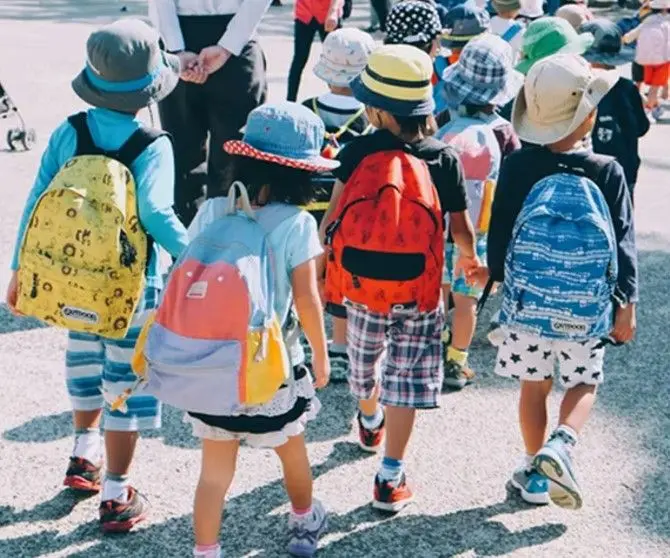
Every spring, millions of parents around the world ask themselves the big question: which school will be the right one for our children?
Here in Spain, application deadlines vary from one autonomous community (Comunidad Autónoma) to another, but they generally fall around Easter (April), and from March you can already start visiting schools as well as nursery schools.
We have to bear in mind that children will spend at least six hours a day there, eight or even more in some cases, and there are many things we can look at when visiting schools on open days or in meetings with the management team that will lead us to that decision.
Public or private school?
This may well be one of the first decisions to make, and it depends a great deal on each family's own criteria.
It is important to stand up for the right to quality public education by everyone and for everyone, but there are always schools that are better or worse organized, just as there are teachers who are more or less motivated and committed, management teams that make better or worse choices, and so on.
In this article we will try to sum up the most important differences between public and private schools (without forgetting that there are also state-subsidized private schools, known as concertados, which make fees more affordable for families), in the hope that they help you make the decision.
Admission
For admission to public schools, you have to fill in the applications and submit them within the deadlines set by each autonomous community.
Here it is very important to assess how many points the family can obtain. Places are often allocated according to how close the family home or the parents' workplace is, whether siblings already attend the school, whether there is a special educational need, and so on.
In private schools the process is completely different. Some of them, for example schools of other nationalities such as British (British School), French (Lycée Français) or American schools, can and usually do require entrance tests. These tests usually consist of exams in Mathematics, English and Non-Verbal Reasoning. School grades and behavior during the interview will also be taken into account.
The difficulty of these tests will, of course, match the student's age.
Teaching staff and internal organization
As for the teaching team, in public schools teachers are either temporary (interinos) or have won their post through a competitive civil service exam (oposición), whereas private schools are entirely privately run and the teachers are employees.
It is also important to know that every school run with public funds must have a School Council (Consejo Escolar), a governing body of the school made up of all sectors of the school community (the school's management team, parents, the parents' association or AMPA, and other staff), which renews half of its representatives every two years.
Educational stages
In the public system we have the EI (Escuelas Infantiles, nursery schools for ages 0 to 3), the CEIP (Colegios de Educación Infantil y Primaria, preschool and primary schools for ages 3 to 12) and the IES (Institutos de Educación Secundaria, secondary schools for ages 12 to 18).
So in public schools children usually start at age 3, after the nursery school period, and finish in 6th grade of primary school, at 12, when they move on to secondary schools. This change is significant, since they are then surrounded by teenagers, and for this reason some families prefer private institutions that offer the full cycle until students leave for university at 18.
Calendar and school hours
One important point to consider is school hours, which are longer in private schools and have quite an impact on family logistics.
Public schools have a "summer schedule" (jornada de verano), meaning shorter hours in June and September, so you need to find options for those dates if the children have nothing to do in the afternoon.
In a public school the timetable is usually from 9 to 12:30 and from 14:30 to 16 (although more and more schools have a continuous day that ends at 14), while in private schools the most common timetable is from 9 to 13:30 and from 15:50 to 17. In other words, children spend on average one more hour a day at school.
Compared with other countries, in Spain we are not the earliest risers, and the fact that the lunch break lasts two hours means we are not the first to leave either.
Normally, the teaching load in a public school is 25 hours a week, while in a private school it can rise to 30 or even a little more as students move up through the grades.
School canteen
Canteen prices in public schools are regulated and in Spain they differ from one autonomous community to another. In Madrid, for example, they are usually around €100 per child per month, while in private schools they can rise to €130 to €150. In private and state-subsidized schools, this comes on top of the monthly fee or "donation" paid to the school.
Although there is always the option of the child going home for lunch, the educational side of mealtime can be worthwhile. Some schools organize it really well or even outstandingly, as with the slow food concept applied at Valencia Montessori School under Juan Llorca, which even has an organic vegetable garden inside the school.
In short, many factors determine the choice between one school and another, and we cannot overlook them, since that choice will largely shape the child's academic future.
If you would like more information on this subject, Aray Asociados has agreements with many private schools in Spain that you can visit and where all your questions will be answered, and we will of course help you so that your child can join one of them if that is what you finally decide.